Food Blog Dot Com

Food Blog Dot Com is written
by Lin Ennis, a writer passionate
about good food, healthful
food and food as medicine.

( Food Lovers Only )

KING CORN

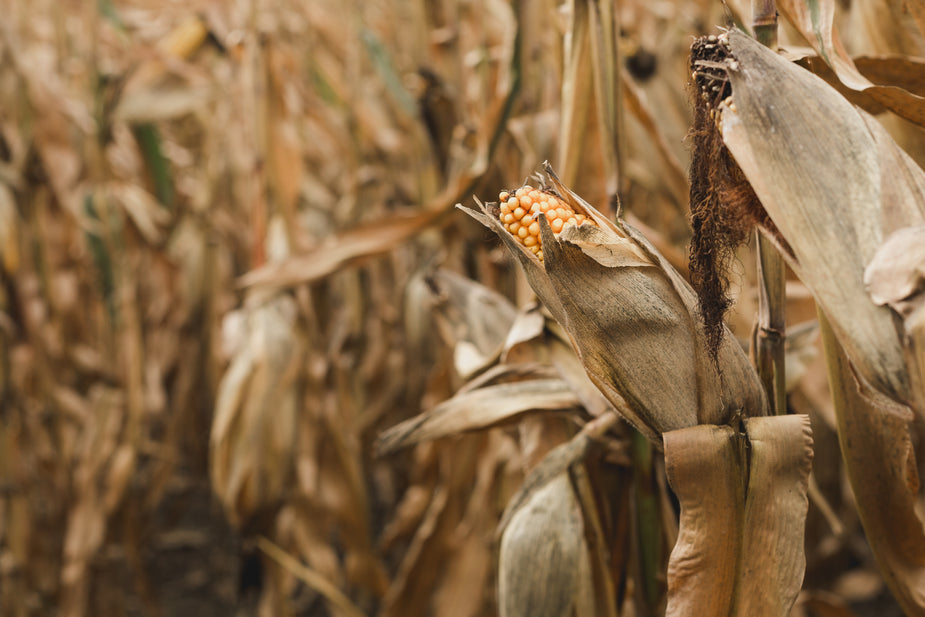
Have you seen the documentary King Corn? I heard about it yesterday, so downloaded it from iTunes for $2.99 for the day’s rental. “Corn-fed beef” sounds wholesome, doesn’t it? Are you aware the corn they are fed is inedible? If it’s industrial corn, as raised in Iowa, it’s a product not designed or grown for human food. It is grown for yield, because the U.S. government pays farmers per bushel. Farmers don’t grow the corn for the money they make selling it. They grow it for the subsidies. When this program came to be in 1973, uses had to be found for the excess corn–mountains and mountains of it you’ll see in the film. About a third of it goes to ethanol production. The rest goes into the American diet, into thousands of processes and food additives. I cannot speak for all corn, because I’ve seen only one film on it. This is about the corn grown in the town they farmed in. The documentary was made because two recent college grads learned they were among the first generation in history who would not live as long as their parents. They sought to find out why. Hair analysis showed they were 25% corn, so they threw themselves into learning about corn. They became farmers. They talked to executives and professors and Earl Butz, the Secretary of Agriculture during the Nixon administration. It was Butz who masterminded subsidies for production rather than for not planting more than could be used. The subsidies created such excess, people had to find uses for the corn or be buried under it! A huge percentage of corn production goes to livestock feed: beef, pork, chicken. Did you know cows cannot live past six months old on the corn diet they are fed? They have to be given low-dose antibiotics to keep them well till they are slaughtered. Ranchers count days cattle are on a corn diet…and in pens because they gain weight faster when they can’t move. Duh! Eating these animals is one way we ourselves become corn-fed. The other is high fructose corn syrup (HFSC), an additive for most sodas and fruit juices. It’s sweeter than sugar, so less can be used, plus it’s cheaper to produce. Why shouldn’t it be? It was never a food! See how hard you have to look to find a salad dressing, catsup, mayonnaise, candy or cookie, or any low-fat manufactured food, that doesn’t have HFCS or some other derivative of industrial corn. The Accidental Hedonist is building a comprehensive list of foods containing HFCS. I’m horrified to see pediatric cough syrup on the list. I’ll write a fuller indictment of HFCS and why it should not be in our diets – at all – in the future. Meanwhile, just from the meat perespective, if the animals fed corn cannot survive on it, what makes you think you and your children can? ACTION STEP Write your legislative representatives. Also write to eating better champion Michelle Obama. Address her like this: Dear First Lady. Mail it to 1600 Pennsylvania Ave NW Washington DC 20500. I heard a line in the film that I intend to use in my letters: “We subsidize Happy Meals but not healthy meals.” (OK, that should be healthful, but it’s not quite as catchy.) Ask your representative, and the president as well, to make changes to the Farm Bill so that nutritionally dense foods, not corn that’s causing epidemic diabetes, get subsidies, or no subsidies at all. Farmers say they’ll grow what we want to eat. Eat naturally, eat locally, and if you eat meat, buy grass fed. You’ll pay more for the steak, but less for your healthcare!

LOW-CAL OMELET

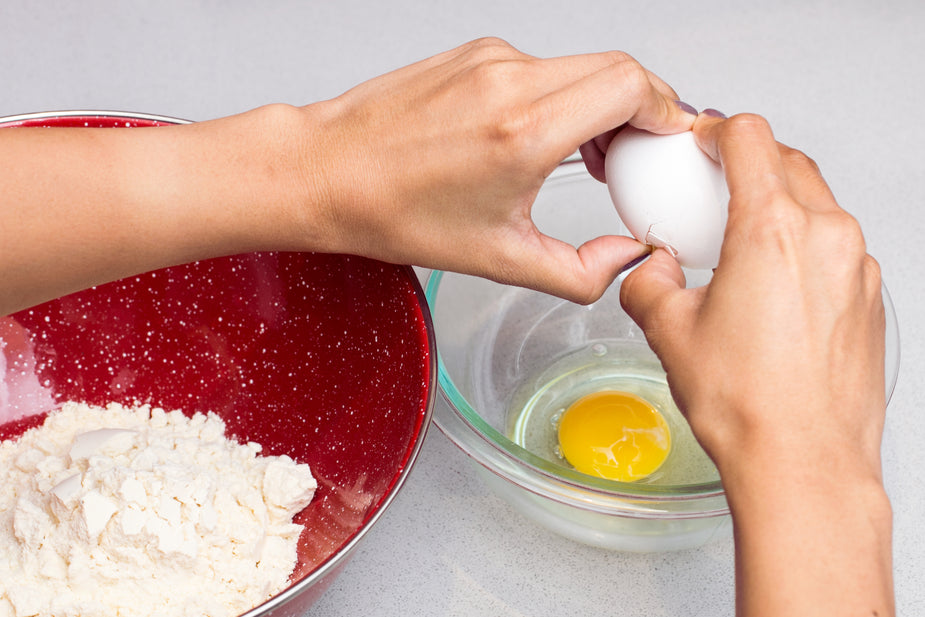
I tried Lucerne’s “Best of the Egg” product. I’m not a big fan of eggs, either for taste or for safety. If I must eat them, I prefer them from organic, free range hens and thoroughly cooked. (I boil eggs for 20 minutes, here at 4300 feet elevation.) Thus my first experience with fat free eggs was a little disappointing: they taste like eggs and they didn’t cook completely dry. I didn’t want to brown parts in order to get the entire mass dry. But they’re pasteurized, right? Yesterday my family asked me to fix Sunday breakfast. That means more elaborate than oatmeal, often involving eggs. The only eggs in the house were the remaining two packs from the Best of the Egg purchase. I decided on a Mexican omelet. After shaking the egg product (egg whites with seasonings, stabilizers, vitamins and minerals), I poured both packages into a medium-hot 7-inch cast iron skillet holding a scant two teaspoons of light-tasting olive oil and half a pat of butter. To this I added salt and pepper, onion powder, finely snipped green onion, and shavings of the flowery part of a bud of broccoli. As the egg mixture cooked on the bottom, with a metal spatula I scraped it toward first one side, then another, allowing the liquid parts to flow around for their turn to be cooked solid. I did not “scramble” or break apart the egg, but pushed it together to cook as a mass. While that cooked on medium heat, I shaved bits of pepper-jack cheese and sharp cheddar cheese (couldn’t find my grater). The plan was to get a cheesy indulgence with as little cheese as possible. When the egg was almost done, I sprinkled on the cheese shavings, covered with a glass lid and set it off the heat for a couple minutes, returning it to the heat to finish the melting. I served what truly looked like an omelet on hot plates, and topped it with a stripe of salsa, and dollops of guacamole and fat free Greek yogurt. It was very well received. Here’s the best part: each serving of about two eggs had only 60 egg calories, a Weight Watcher’s point value of 1 instead of the 5 two whole eggs would carry. The cheese, less than one-half ounce per serving, added about a point (around 50 calories). A generous 2 Tablespoons of guacamole could stack on 90 calories – another Weight Watcher’s point. Salsa and fat free Greek yogurt, which we use anyplace we would otherwise use sour cream (including in Stroganoff) add yum value and nutrition without adding points. All tolled, each delicious omelet was five points and around 250 calories. That’s something I could do again. And it didn’t taste too much like eggs!

TRY NEW FOOD

Yesterday I ventured further into the pepper kingdom.I eat bell peppers all the time, both raw and cooked. I’ve occasionally purchased a tiny banana pepper or two. I called the produce manager over to explain to me which hot peppers were which so I could choose one. I notice peppers come in two categories: sweet and hot. There isn’t a category for mild. I think the pepper I selected is an Anaheim chile pepper. (The word chile makes it sound hotter, too, doesn’t it?) I was proud of my modest one-pepper purchase. An adventure. I admit it isn’t the Iditarod, but in my pursuit of better nutrition, my quest for phytonutrients, I’m trying new foods. It’s risky. I aspire to testing out something new each week. It may not be a food I’ve never eaten before; it may be a new way of preparing it. Like the almonds I just munched, toasted with a sprinkling of Ume Plum Vinegar–delicious! No need for added salt or oil. Tell me about your food adventures. Do you have a goal or method for trying new foods? Or do you always eat the same 15 or 20 things? What was the last new thing you tried? Any fruits or vegetables in your taste experiments?

WEIGHTLOSS

I’m not a huge fan of the phrase weight loss, because I bought into the concept, that subconsciously, things that have been lost need to be found. I believe I picked up that idea from the author of Thin Within, Judy Wardell (Judy Halliday now, or before?). I prefer the idea of “releasing energy.” Everything is energy. Matter and energy can go back and forth, just like water and ice cubes. You can melt the ice and have water (energy, in this analogy), and you can freeze the water to again have ice (solid matter…or is it?). You can also turn ice into steam. Interesting! I’ll admit I have recently released 82.6 pounds of unusable, burdensome energy that is now free in the world to perform good needs and spread kindness, compassion and courtesy to one another. I wish this were the first time I needed to address an eating compulsion. It is not. But I won’t try to explain it, excuse it, or even examine it. Today, I am merely celebrating a transition to a new, healthier phase of my life. I eat vegetables as though they might disappear tomorrow, and if I don’t eat vitamin K and E and A and C now, how will I be the fit, energetic, helpful, vital person I choose to be? Me, June 13 2008, the morning after I joined Weight Watchers I apologize that the images aren’t identical in dress and pose. One cannot wear a size 2X top at 147 pounds without looking like she’s on the way to bed! (Don’t you hate those befores and afters where they get a full beauty makeover in the after but look like @#$% in the before?) The photo I’m showing as after was actually taken five months ago, but since I own all the cameras in the family, no one ever takes pictures of me (well, I do, but there’s quite a bit of set up involved in self-photography.) I’ve released about 10 pounds since then. OK, I acknowledge the person in the photo to the right looks confident and relaxed…and a little bit daring: bring it on! The gal above is trying hard to look fun and involved in life, but is hiding behind fat and gobs of eating because of dissatisfactory circumstances which she chose to forget over food. (The necklace is the same.) One reason people look better in all their after pictures is they feel better about themselves. Their friends and casual acquaintances tell them how terrific they look (some urge: “but don’t lose any more”). Cute, inexpensive clothes are made for smaller sizes, at least in women’s. To get large-size stylish clothing, one has to step up to some specialty shops. At the Weight Watchers meeting tonight, people confirmed a common benefit of reaching their goal weight is they look younger. A late-80s-year-old writing mentor of mine told my partner she’d better take good care of me and keep me close or someone would surely snatch me up because I’ve become so attractive. She swears I could pass for 20 years younger. I’m not sure about that, but in many more natural and less flattering photos than top left, I’m sure I looked 20 or more years older! I was reluctant to join Weight Watchers. I’m not much of a joiner. I sit on the end of the row in any sort of meeting so I can make a hasty escape. I’m an independent thinker. Weight Watchers seemed so mainstream. It has worked for me. Now a lifetime member, I will continue to go to the meetings until I believe my eating disorder is cured. It may never be cured. But tonight I’m happy and thankful and grateful and about to eat spaghetti! Yay! What’s your story? Me, Aug. 9, 2009, five months before reaching the Weight Watcher’s highest weight limit for my height: their Lifetime Member requirement.

BRAGGS VS. SOY SAUCE

I switched from soy sauce to Bragg’s Liquid Amino Acids. While I haven’t performed a side-by-side taste test, neither would I be able to tell the difference if given two equally seasoned foods! My neighbor mentioned she didn’t use soy sauce, because her husband is allergic to MSG (all the names that masquerades under would be good material for another blog!). I asked, “Have you tried Bragg Liquid Aminos?” She’d never heard of it, but promised to look into it. I offered to loan her some. She emailed me back that what she learned online made it sound like pretty much the same product as soy sauce. I found a good discussion of how Bragg Amino Acids are made on the Essential Oil Cookbook site. I figured asking how Bragg’s is made would offer the clue to whether it’s the same as soy sauce. (And how many amino acids are in soy sauce?) Evidently Bragg has not revealed their process. Now here’s information about soysauce that will really blow you away: Twenty-five kinds of soy sauce were clearly distinguished with the sensor, but classification into three conventional groups, i.e., koikuchi (high amino acid, low NaCl), usukuchi (low amino acid, high NaCl) and sashimi, could not be made. Contrary to this, it was found that the tastes of three types of soy sauce, which were produced by the same manufacturer, resembled each other. The similarity of soy sauce by the same manufacturer was also confirmed by amino acid analysis and a sensory test. The taste sensor will contribute to automated soy sauce brewing. As it turns out, all soy sauce has amino acids and sodium chloride. The proportion may vary and definitely varies in soy sauce, because you can buy low-sodium soy sauce. Here’s my own little study comparing 1 Tablespoon of two products: Liquid Amino Acids Food Club Soy Sauce Sodium 960 mg 5% more than -> 910 mg Carbs .6 g 40% less than -> 1 g Protein 1.86 g 86% more than -> 1g One thing that can be said for the Bragg product is they certify they do not use genetically modified soybeans (GMO = genetically modified organism). And one more thing: liquid amino acids sounds more healthful than anything with the word “sauce” in it! Good marketing, Bragg! If you can shed light on this discussion, or even just your own experiences, FoodBlogger would love to hear from you!

EAT COLOR

Eat the deepest, darkest, richest colors of fruits and vegetables you can find. White foods – potatoes, pasta, rice, corn – have been reduced in the diets of many health-minded people. Some are motivated to lower the percentage of carbohydrates in their diet. Some want to lose weight. Others are looking for phytonutrients. You’ve probably heard since grade school you should eat a wide variety of fruits, vegetables, grains and nuts. After watching yesterday’s Ominvore’s Dilemma video by Michael Pollan, I believe the width of the variety is more important than I had thought. We get most of our food from four plants, he said. All together now: “That’s just wrong!” I attended a nutrition lecture given by Dr. Michael Gregor. Annually, he reads hundreds of peer-reviewed nutrition studies to remain current with the latest scientific evidence on nutrition. In his game-show style presentation, he flashed pictures of related fruits and vegetables and asked the audience to answer, for example, which apple is better for you? Which is it? While these are not the same apples used in Dr. Gregor’s talk, I remember the winner was red delicious. I was disappointed, because golden delicious was my favorite. (I find red delicious skins are often tough.) But by the time that round of quizzing was over, I’d caught onto how to answer each question correctly. The food with the deepest color wins. Thus, winter squash are going to deliver greater vitamins and more phytonutrients than are summer squash. Unfortunately, pine nuts (another favorite of mine) ranked lowest on the list of nuts, with _____ delivering the best nutritional value. (Type in your answers below. I’ll pop back to the blog and update you after we have several guest answers.) But that makes sense: pine nuts are white. Therefore, it’s illogical to peel the red delicious apple before eating it, right? The most-popular vegetable in America is broccoli. It’s very good for you. But Swiss chard has nearly 20 times as much vitamin A! However, broccoli has nearly four times as much folate and nearly three times as much vitamin C. That’s why you need to graze all the way down the greens aisle. I know I would be happy with green peas, green beans, spinach and broccoli. After hearing Dr. Gregor’s talk, I’ve made a concerted effort to also eat mustard greens and turnip greens. (I haven’t bought collards yet, but I’m thinking about it.) I even switched onions. Which offer the most healing power to the body? I think you can guess that would be red. He threatened he never wanted to see or hear of any of us ever buying a white onion again. (Busted: that was my favorite, but I’ve switched.) In Weight Watchers I learned most people eat the same 15-20 foods over and over. My list is over 100. And I’m still broadening it. According to Pollan’s analysis, soy burgers, tofu, soymilk, tempeh, etc would be one food. Why? They’re all from the same plant. Counting the source would reduce my “varieties.” Are you ready to take the eat deeper colors challenge? And diversify y0ur fruits and vegetables? You can find nutrition values online, but you don’t really need them, unless you’re treating a specific condition. Just follow that grade school advice: eat a wide variety. And add to that advice: Eat color! Photo courtesy of PDPhoto.org

OMNIVORE’S DILEMMA

Michael Pollan, author of The Omnivore’s Dilemma, speaking at UC Davis Mondavi Center, on agricultural sustainability. Specifically, he address organic foods versus locally grown foods. If you’ve not yet read The Omnivore’s Dilemma, please do take the time to watch (or listen to) this video. The larger the food distribution system, the more dependent it is upon foreign oil. Transportation supplies 18% of the carbon footprint. Food is 17%. So while we’re driving hybrid cars, what are we doing to change the way we eat?

MOST NUTRITIOUS

What is the world’s most-nutritious food? I wondered, so I Googled it. The answers convinced me that isn’t the right question. Here are results from just the first page of Google search: wolfberry, milk, spirulina, prunes, prunes (2 listings, different sources) and idly. Noticeably absent from this list are avocados, bananas and chia seeds. (Of course, there are reasons a webpage receives top ranking in Google that may have little to do with the content on that page, but the ranking does show popularity of the site for the phrase “most nutritious food”.) One of the holistic health writers I followed as a young person said “Apples are the best food.” I questioned that. Looking into it further, I discovered the context involved availability and storability–both key factors when she wrote in the early 20th century, and much less so today. But this does make the point that convinced me searching for the “most nutritious food” is misguided. What is best for you to eat is something that is: Where you live seems to be the first consideration when considering a “world’s best food.” If goji berries grow outside your front door, eat them! Some countries, like the United States, have access to exotic foods from all over the world. Myriad companies are selling fruits, both dried and juiced, that were unknown in the West 15 years ago. Supermarket cashiers are no longer expected to know what kind of pear or squash is rolling across their scanner–the varieties are so great, each item has a code number. What is the most-nutritious food you currently eat? I’d like to hear about it in the comments below and get some discussion going. Or is there something you aspire to add to your diet but you haven’t yet?

MUSHROOM RAVIOLI

Safeway Organics says, “Organic Wild Mushroom & Cheese Ravioli – 10 Oz We start with organic pasta, then fill it with organic portobello and porcini mushrooms, whole milk ricotta, parmesan and romano cheeses, and a little balsamic vinegar. USDA organic. Certified organic by Quality Assurance International.” Making a truly indulgent dinner, we sauteed about 4 ounces of chopped Baby Bellas (portabello mushrooms) in 2 Tbsp butter. Not wanting to buy or make an Alfredo sauce (watching calories), we used a packet of dried Stroganoff mix over the mushrooms. Instead of a cup of sour cream, we added the remainder of a cup of non-fat Greek Yogurt (Fage) and a bit of the boiling water from the ravioli cauldron. We steamed a gorgeous bundle of fat asparagus spears until completely tender, yet still bright green. An Organics mixed greens salad with avocado, tomato and green onion added, along with an Organics red wine vinaigrette filled out our plates, making for a totally delicious repast including sweet, sour, salt, bitter and decadent satiety with the butter-sauteed mushrooms in light brown sauce. I’m not trying to trumpet Safeway or their new Organics brand particularly, but they’ve recently upsurged their organic product line, and it’s worth noticing if you’re health-minded and frugal, both of which I am. (In fact, I got five pounds of organic red delicious apples for under $3.00–the price of about two other-branded organic apples!) Are you a fan or organic food? Have you tried any of Safeway’s? What can you add to this discussion of ravioli, asparagus and spring greens salad?

BROWN RICE

Another new discovery I made recently is precooked organic brown rice, tucked away in the frozen food aisle of Safeway of all places! Part of Safeway’s new “Organics” line, it’s so new it isn’t even on their website yet! Three microwavable pouches come in each box. While the package lists each pouch as 2 servings, one cup of brown rice would be four points in Weight Watchers, so I prefer to divide a pouch into at least three servings. The rice is grown in Northern California’s Sacramento Valley, by farmers committed to sustainable practices. The best part about it is it is not genetically modified. No, the best part about it is I can have rice when I think of it, instead of needing to think of it 45 minutes to an hour before I want it!  It is prepared without salt or added fat. The 10 calories of fat per cupful are naturally-occurring. Now you know what to serve your Napa cabbage stir fry with 5-spice powder over!