Food Blog Dot Com

Food Blog Dot Com is written
by Lin Ennis, a writer passionate
about good food, healthful
food and food as medicine.

( Food Lovers Only )

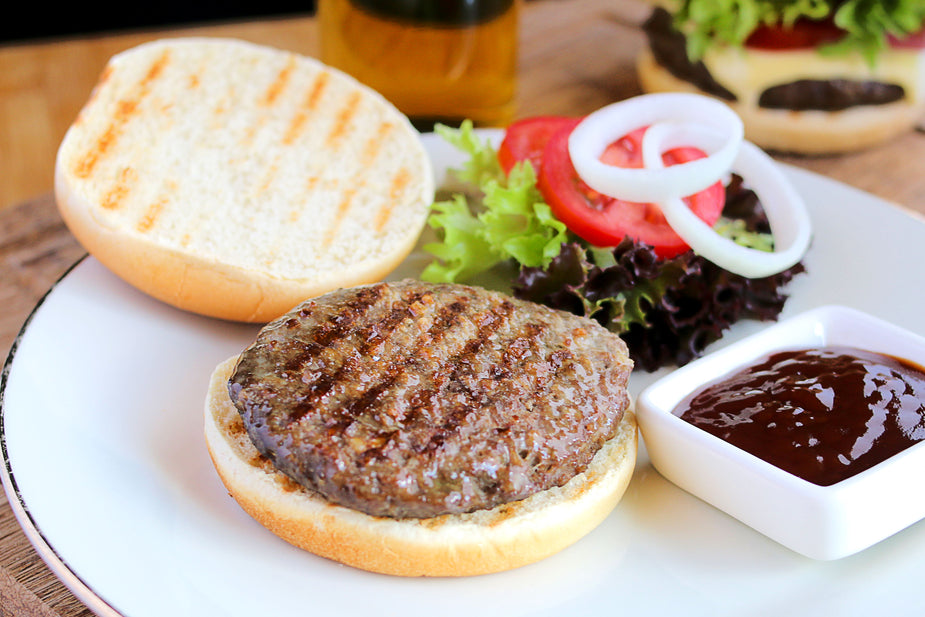
LOW CALORIE BURGER

I made Taco Soup over the rainy weekend, a recipe I copied down at Weight Watcher’s last week. It’s basically pinto beans, hominy, canned tomatoes with chiles and a packet of taco seasoning.The leader said the entire recipe was 63 WW points value. It looked to me like it would yield 5.5 quarts, thus 11 2-cup servings would be 5 points each. She said it was 8 servings, so a serving would be 8 points. (I had to leave out one can of beans and 2 cups of water due to the size of my crockpot, about 3.5 quarts.) I thought it would be easy to do the math and get to the truth. I looked up 90% lean ground beef for the three numbers Weight Watcher’s uses. Product Calories Fiber Fat Points 90% lean ground beef pound 798 0 45 21 My first problem is my WW slide rule for points values does not go up to 45 grams of fat, or even to half that. Dividing the calories and fat into thirds, I arrived at the numbers above. When a recipe calls for a pound of ground beef, I use one bag of recipe crumbles, 12 oz. I don’t know what the equivalent of a pound is, but a pound of ground beef might cook down to about the same size as 3/4 pound of crumbles, because the crumbles will have less shrinkage due to fat separation. Has anyone conducted an skillet beside skillet comparison? Here are the Morningstar Farm Recipe Crumbles compared with 12 ounces of 90% lean ground beef: Product Calories Fiber Fat Points Crumbles 12 oz. 480 18 15 10 Beef 12 oz. 599 0 34 14 It’s easy to see the recipe crumbles save points two ways: they have far fewer calories and they have more fiber. Using the Weight Watcher’s points value calculation, one cannot count more than 4 grams of fiber per serving. The points in the chart above recognize the four-gram limit. However, no one is going to eat 12 ounces of burger crumbles or 96 ounces of taco soup! I’m at a loss to calculate either the whole pot of soup points or the points in one serving. Conclusion: In a spicy dish like chili or taco soup, your omnivorous friends are unlikely to miss real ground beef, especially the 90% lean variety. The crumbles will make the dish less greasy, and a solid white film will not form over the refrigerated leftovers. (The film would be solidified saturated fat from meat.) Save yourself huge calories by enjoying MSF Recipe Crumbles, in the freezer aisle near Boca Burgers. *Weight Watcher’s, Points Value, Morningstar Farms, yada yada, are all trademarks of their respective companies.
CARA CARA MI AMOR

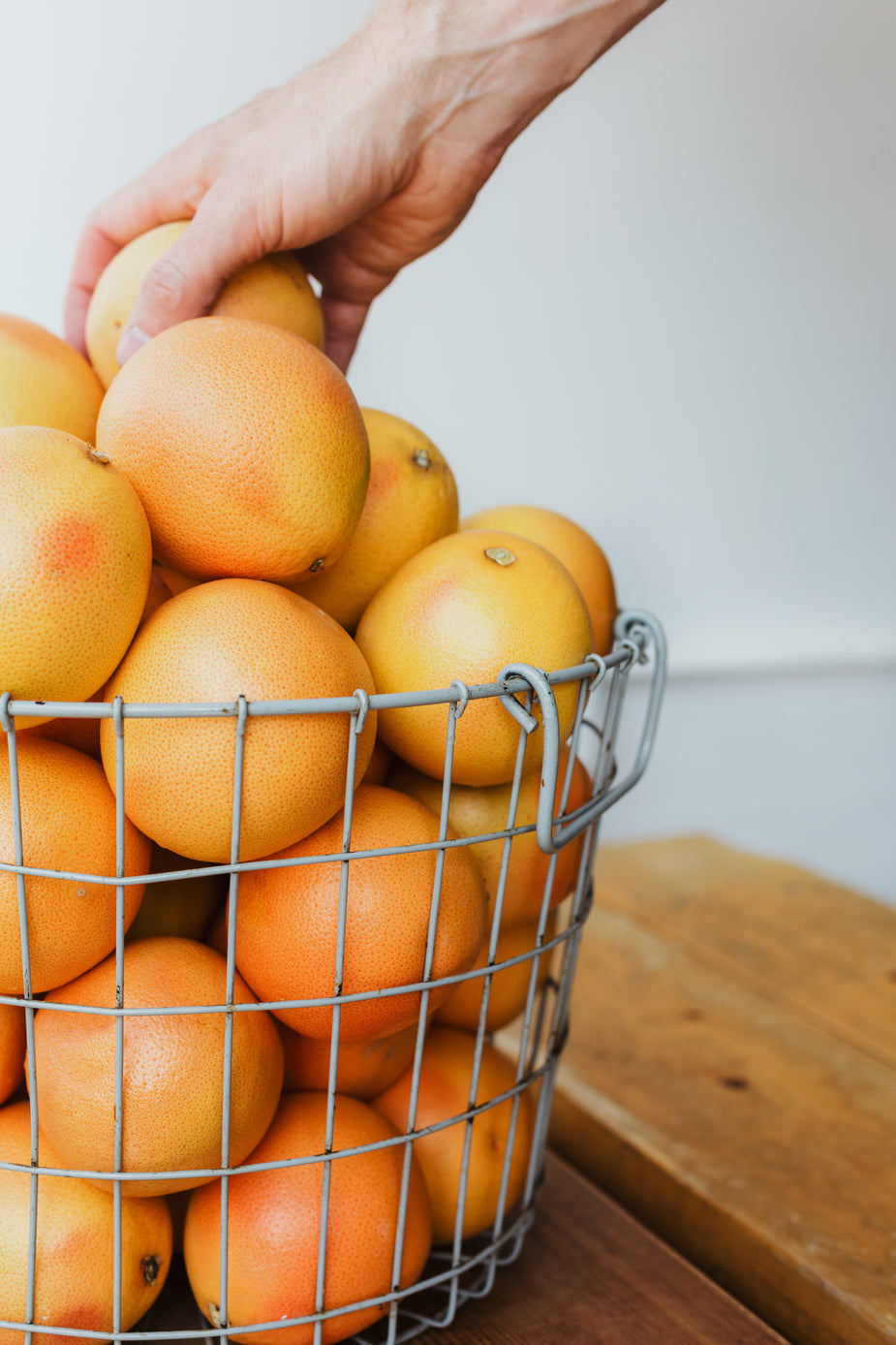
I’ve fallen in love with a new food. Just this winter did I run a taste test on apple varieties to decide which I like best. I’d never thought to run such a test on navel oranges. I mean, they’re navel oranges, aren’t they? Then I cut one open that was more red than a pink grapefruit (Texas pink grapefruit are the best…I like Florida for oranges). I thought about blood oranges, which have become fashionable in high-end restaurants for glazes, etc. This orange was the sweetest, tastiest I recalled ever eating. The white pulp was tender and filling (citrus white linings are supposed to help reduce cravings when you’re quitting smoking). The checkout code said “Cara Cara.” The next morning I cut open my second Cara Cara. It was as salmon-colored and sweet as the first. I went from a person who knew navel oranges came in different sizes, but not different varieties, to being totally enamored with this variety. I don’t know where I got them, but I’m sure they were on sale, because that’s how I buy oranges. I asked the produce manager at Basha’s if they had Cara Caras. He said they come in in April. Every website I’ve seen talking about them say the middle of winter–December and January. I recommend you look for them everytime you go to the store. When you find them, make note of the season. I’ve read they are not good if purchased at the end of the season (last summer’s peaches all rotted from the inside out after the first picking–I quit buying them after doing some Internet research on the cause of the blight). When you find Cara Caras, please let us know when and where. And tell us, are they a new love for you?

SKINNY BUNS

Almost everyone who talks with me about the dietary aspects of their health regimen mentions cutting back on or eliminating bread. They offer various reasons such as celiac disease, gluten intolerance, carb addiction, etc. In most cases, their reasons affect body weight, or what I’m calling here today a desire for skinny buns. Years ago, someone taught me the best way to enjoy a hamburger – especially if trying to appear normal, was to remove the bun, and use your four fingers clinched together to scoop out most of the bready part, leaving the crust, and thus the appearance of a bun. Do this to both top and bottom pieces and you have a thin bun, about half the bread, and something to keep the mustard and catsup off your hands as you eat your burger. If you’ve participated in burger eating while reducing or eliminating bread, you’ve probably also done the lettuce wrap. Realizing the best part of a burger – especially a veggie (vege) burger – is the condiments, pickles and mustard wrapped in lettuce around a burger make a pretty good meal, albeit a bit light. Oroweat was first on the scene with a skinny bun for your skinny buns. Their Sandwich Thins come in multigrain, whole wheat and honey wheat. I prefer the flavor of multi-grain anything to whole wheat, and appreciate the additional micronutrients variety adds to my health. Sandwich Thins were so popular when they arrived in Sedona, most stores sold out before the entire Weight Watchers membership could buy them! Oroweat Sandwich Thins Calories 100 Fat 1 gram Fiber 5 grams WW pts* 1 One slice of the bun is a bit thin, usually tearing in half before the burger is consumed. And of course they’re better lightly toasted. I found this ingredient listing on kaboodle.com: Whole wheat flour, unbleached enriched wheat flour [flour, malted barley flour, reduced iron, niacin, thiamin mononitrate (vitamin B1), riboflavin (vitamin B2), folic acid], water, cellulose fiber, wheat gluten, yeast, sugar, cracked wheat rye, polydextrose, salt, ground corn, canola and/or soybean oil, preservatives (calcium propionate, sorbic acid), grain vinegar, guar gum, cultured wheat flour, brown rice, oats, mono-glycerides, soybeans, triticale , barley, flaxseed, millet, citric acid, sodium stearoyl lactylate, sucralose, soy lecithin. A newcomer to the skinny buns category is by Earth Grains, a proud supporter of The Nature Conservancy. You can probably see where I’m going with this. EarthGrains Thin Buns Calories 100 Fat 1.5 gram Fiber 4 grams WW pts* 1 I made my decision rather hastily when I picked up the Earth Grains. First of all, they’re a little bigger, at 4.25-4.38 inches across. (I don’t have a Sandwich Thin in the house to measure; do you? If so, post below.) Secondly, there’s no white flour. Third, the ingredient list is 18 instead of 28 (plus the 6 ingredients added to the white flour after the bran and germ were removed – at least they left out the bleach!). EarthGrains ingredients: Whole wheat flour, water, sugar, wheat gluten, oat fiber, yeast, soybean oil, cultured wheat flour, salt, distilled vinegar, guar gum, enzymes, enzyme-modified soy lecithin, Raisin juice concentrate, Wheat bran, Milk, Soy flour, Sesame seeds. Note: there is milk in the EarthGrains. And not as many different grains. But it appears to my unscientific eye there are fewer chemicals. No artificial preservatives, so refrigerate or freeze them! Plus, if you’re going to believe the EarthGrains website, they support individual farmers rather than mega conglomerates–but I haven’t found my way back to that page to recheck their statements. Anyway, enough time on skinny buns! I love them, though I still limit myself to only one or two a week. You have to know your body and what it can handle as well as what makes it thrive. All trademarks are owned by their respective registrants. *Weight Watchers Points Value was obtained by using my official Weight Watchers Points Finder and the nutritional information given by the manufacturers.

GREENS

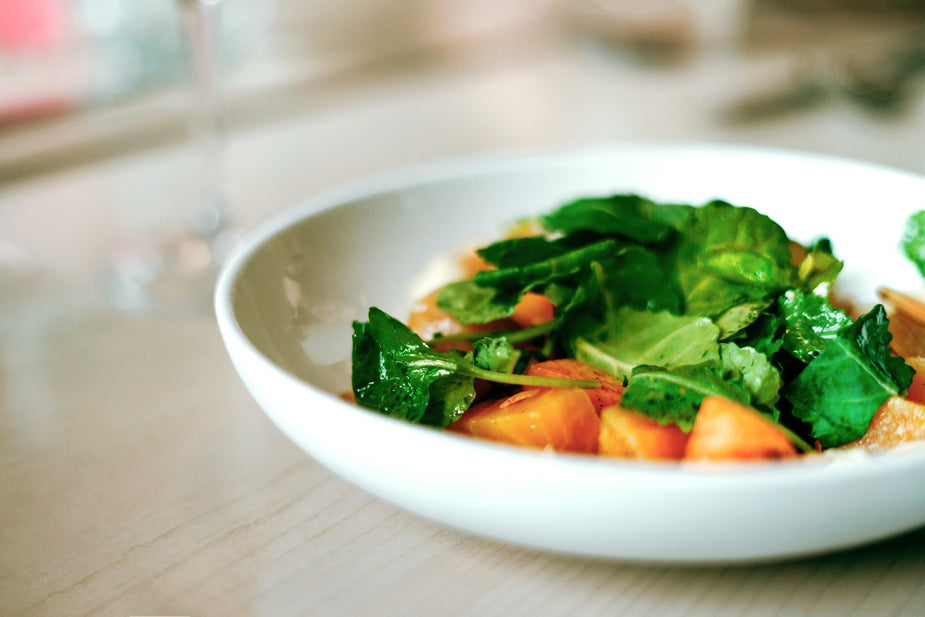
These might be turnip greens. Or mustard greens. I’ve forgotten since I took the picture last week and didn’t have time to post it till today. I found a turnip in the fridge later–that would have been a reasonable pairing: turnip and turnip greens! But the day I fixed this for lunch, I was all out of ideas, so I Googled for a recipe. I quickly found one posted by a person who loves beans and greens. She pictured white beans, like Great Northerns, in her recipe. That looked nurturing for a winter lunch. Staring at the wall of canned beans in my pantry, I said aloud, “Why not Garbanzos?” I can’t call this a recipe, because all I did was steam the greens in salted water and toss in a couple spoonfuls of garbanzos to cook long enough to reduce that canned-bean crunch garbanzos usually have. Enough protein to be satisfying, and enough greens to be light and healthful. It would have been prettier had I ladled the beans on top of a mound of greens, but this way, I had only one pot to wash! One reason I don’t remember whether they were turnip or mustard greens is because I’ve been buying both, along with spinach. In our post on eating color, I recommended following Dr. Michael Gregor’s advice to eat across the spectrum. Each plant food has a different composition. You’ll get different nutrients from broccoli than from apples, and different nutrients from turnip greens than from mustard greens. So eat them both. Eat them all. I haven’t had collard greens since I lived in the South where it was customary to boil them all day. But I will try them. I also enjoy red Swiss chard. Sunday night I made fresh spinach with sliced button mushrooms and diced onions. That was a family hit. (Whatever it takes to get people to eat spinach!) What are your favorites and how do you prepare them?

ON BECOMING A VEGETARIAN

Thanks to Larry Rosenberg for this guest post. For years I was aware that important people to me were becoming vegetarians. Some gave the explanation of better health (or less weight and disease), better for animals (who will now be more at ease with you), or better for the Earth’s sustainability. I also realized that the definition of a vegetarian was flexible, sometimes strict in banning non-flesh foods or even eggs and dairy, and other times more inclusive. As I have aged (I am now 66), I have recognized that the path to optimal health and longevity involves diet, exercise, stress management, relationships, environment and life purpose/fulfillment – or what I call the “Agenda of Six.” Over the decades, I have observed that many people I know are not aging well and even “crashing and burning” – getting diseases as immune systems weaken, losing mental clarity and memory, declining in energy and joy in living, and drifting without life purpose and vision. I have been doing my best to enhance my Agenda of Six to live well and long (with my goal being a modest 100). Slowly my diet has improved over the years. But I came to realize, from friends and websites, that I was risking my health with some risky eating habits. Among them were comfort foods (wheat bread and pastas), white sugar (in pastry), prepared foods (full of unpronounceable ingredients), and chicken and fish (raised under questionable circumstances; I had given up red meat long ago). I was also told of the vitality gained from raw foods and how they deprived prospective cancer cells of fuel (too many people I know have suffered from cancer). As my mother was such a bland and cautious cook, when getting my first apartment at 23, I have been dedicated to being a gourmet cook, which meant I prepared foods from exotic ingredients and in diverse combinations – too often of dubious health value. I also became conscious that I compensated for unconscious-based emotional swings by eating too much of this or too rich of that – with bloated, tired and gaseous results. When I learned that America’s average health span ends seven years before the average life span, I declared that I wanted to be healthy – in body, mind and spirit – until the day that I passed on. I decided to take the Big Step – and undoing an eating style of decades is a Very Big Step – and become a vegetarian! But my own version of one. I believe in the benefit of ritual, and saw the value of clearing out the old (past) before transitioning to the new (future). The result was my seven-day cleanse – including digestive herbs in pill and powder form, fruit and vegetable smoothies, and a series of colonics (using water to flush the “gunk” out of the intestines and adjacent organs). While not an easy regimen to follow, this preparation nicely readied me for a new way of eating. I am now happily my own model of a vegetarian. I said good-bye to fish and chicken. I prepare more raw foods, especially salads (created from 20 or so ingredients in my refrigerator). I buy virtually all-organic ingredients. I avoid wheat and dairy products. I reject food in cans. I make soups from fresh and organic ingredients. And I cook up healthy grains, some from Peru and Ethiopia, which until recently I had never heard of, adding various spices, soy sauce, nuts (soaked overnight to aid their digestibility), and vegetables (especially onions and garlic) I was aware of the wise saying, “Sometimes you have to feed the wolf to save the sheep.” To me this means having occasional eggs, which I adore; and enjoying raw chocolate, which I now make myself and amaze others with its deep, natural and alive taste – it is simpler to whip up than I ever imagined and fits into my passion for creativity. And I reserve the right on special occasions to consume – in very small quantities to avoid shocking my body – that are no longer on my acceptable list, such as pumpkin pie with fresh whipped cream. If you are considering becoming a vegetarian, let me share this advice with you: Do a seven-day digestive system cleanse to make the transition from old to new eating habits. Find an expert in the vegetarian, raw and healthy cooking realm to teach you how to genuinely enjoy, not just cope with, this new world of eating. Come up with your own definition of being a vegetarian – what you give up, what you follow, and what treats you will allow yourself (in moderation). Remove the forbidden foods from your larder (donating them to food banks), and stock up on fascinatingly healthy foods, such as Himalayan salt and coconut oil. Select restaurants that have several vegetarian options on the menu, particularly exciting salads. When invited to meals in people’s homes, gently explain to them in advance what you now can and cannot eat; be somewhat flexible to consume in polite moderation foods placed in front of you that are now off your list. When people ask you why you are a vegetarian, respond with diplomatic precision and brevity, and without boosting and judging their old-paradigm foods. So go ahead, consider becoming a vegetarian – to boost your health, control your weight, love farm/ranch animals, or save the planet. Plus, learn to creatively prepare foods from the Earth’s garden that contribute to your joy of life!

BETTER THAN INSTANT OATMEAL

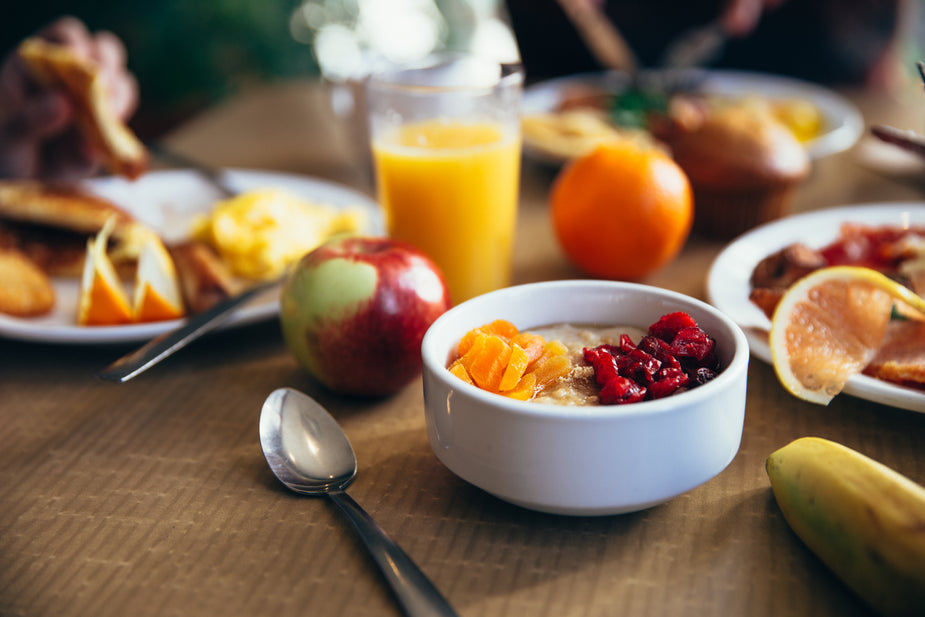
Oatmeal is good for you. Check out oatmeal’s nutritional stats. It can help lower cholesterol. It has soluble fiber – good for irritable bowel syndrome and related disorders. It’s warm. It feels nourishing while it is being nourishing. Why don’t we eat it more often? Because we think it’s too much trouble! I’ve experimented with instant oatmeal, both brand name and generic. As well as whole rolled oats, steel cut oats and quick oats. As far as I’ve been able to determine, they all have the same nutritional value. (If you have different information, please cite your sources below.) Oats are not separated or degermed when processed. They are just cut or rolled, or cut and rolled. Nothing is removed except the inedible husk. So rather than spending three-times the cost of oats for instant oatmeal, follow my recipe below. Place on paper plate in microwave oven. Heat for two minutes (four presses of the express button!). The paper plate will catch overflow as well as help you remove your cereal without being burned. (If there was overflow, use a larger bowl or less water next time.) For creamier oatmeal, add more water. For dryer oatmeal, add less water. Once you’ve visualized these measurements, you can pour oats into your bowl, hold the bowl under the filtered water tap, and pop it into the microwave without measuring. I find adding toasted, slivered almonds balances the flavors, offsetting the need for sweetener. Slice a banana onto it, add some berries, stir lightly and enjoy. Occasionally, I add almond milk to thin it out and cool it down for my ravenous appetite. Bon appetit. NOTE: Clean your bowl before placing it into the dishwasher. A brush may be necessary. Starches are not usually released during regular automatic dishwashing cycles. Cereals are particularly sticky.

STIR-UNFRY

I’ve blogged about stir fry a lot. The truth is, my “stir fry” has little in common with stir fry except for similar ingredients and a bent toward healthfulness. Is it because I don’t have a wok (or a place to store one) or because I can’t stir fast enough? How does one make a meal in 1-2 teaspoons of olive oil? Please, tell me! I like raw vegetables. I like cooked vegetables. I’m less fond of raw vegetables that are just a little bit cooked. Here’s what I have been doing. Heating the oil in a skillet (love using the stainless steel omelet pan — perfect for one), then adding chopped onion and pressed garlic. Turn on the teakettle to heat water. When the oil is about gone, I splash boiling water into the pan, cover and continue slicing and dicing. As the cooking progresses and ingredients are added to the dish, I keep adding boiling water as needed. I realized while talking with friend Sonja last night, I’m steaming my veggies. She doesn’t add oil till the cooking is complete – a process I heard encouraged by Dr. Anita Balodis, holistic family practitioner, Chicago area. Oil heated above a certain temperature turns on you, causing inflammation (#1 cause of illness and incapacitation) and potentially death, depending on the heat and kind of oil. [You don’t hear of people dying from the carcinogens on barbecue and French fries, but that doesn’t prove that isn’t what debilitated them.] Sugar peas are great added right toward the end, because they take only a couple minutes to be perfect. I’m still enjoying 5 spice powder, used a red pepper olive oil today. Crushed red pepper is a nice addition. While I’m proud of the adventures I’ve taken into new foods, I’ve traveled less far afield in seasonings. I fear growing tired of the ones I favor, then being back to blahsville. I’d like some suggestions, please.

RECENT EXPERIMENTS

I’ve blogged about several new foods or new ways to prepare them. Now that I have a bit more experience, I’ll report on several. 5 SPICE POWDER I made some. I bought some. I like what I made better. Pal Richard said, “Yes, because it’s so much fresher.” Not sure that was the case with mine, because several of the ingredients from my spice rack were far from fresh. But the two don’t have the same ingredients either. The purchased one also contains ginger, licorice root and white pepper. Though I didn’t use Szechuan peppercorns in mine, nor did I measure everything carefully, mine has a distinct peppercorn punch to it, which I love. The purchased one smells like it belongs on sweet food…almost like a pumpkin spice. ANAHEIM CHILE People have asked about my chile. I cut about an inch and a half from the tip to put in stir fry. I removed as much of the rib membrane as possible, because I read online that that’s where most of the heat is carried, besides in the seeds. It added a nice punch to the veggies. Yesterday I cut a similar-length piece. Turns out, an inch and a half from a wider part of the pepper makes a serving of veggies hotter!  This will become a regularly-used food. RED CABBAGE In response to my ode to Napa cabbage, Virginia shared how she uses red cabbage. She gave us her very fresh-sounding salad recipe. She inspired me to buy a red cabbage and add a thin slice to salad and stir fry. My current diet manifests my passion for eating as much color, and deep color, as I can squeeze in. Thank you Virginia! SUNCHOKES Jerusalem artichokes are also a food I associate with Virginia. She may have introduced them to me. Using them as water chestnuts in yesterday’s stir fry didn’t go as well as expected. I received a business call part way through cooking lunch. I piled cabbage in the skillet on top of the harder veggies which I’d already sauteed, put a lid on and set it off the heat while I finished the call. Twenty minutes later, I remembered the sunchokes. I quietly sliced one and stirred it into my almost limp mixture. By the time my call was over, my lunch was very limp – except for the sunchoke slices, which were as crisp as when I sliced them. I’ll try this again!

JERUSALEM ARTICHOKE

I was introduced to this homely vegetable when I lived near Chattanooga, on the Tennessee-Georgia border. Since I’d eaten raw potatoes when playing house as a schoolgirl, the taste and texture were somewhat familiar. However, the carbohydrate in what is now commonly called sunchokes (see reasons above) is not starch, but rather inulin. Inulin is converted in the digestive tract to fructose rather than glucose, so it can be tolerated by diabetics from a sugar perspective. (Some people say it gives them gas. How much are they eating at $3.50 a pound?) I was delighted to find them at the Farmer’s Market Sunday. Here in Northern Arizona they are a winter vegetable, sweeter after the first frost. The vendor explained I could cut off any eye and plant it, like a potato. I thought that would be a wonderful addition to my elevated herb garden and flower pots (since Javelina thrive on roots and dig up many plants just to taste whether or not they’ll like its root). However, after checking it out on the Internet, I see this is not a good option for me. They grow to six feet in height, producing wonderful yellow, daisy-like flowers. Fine, but not for elevated gardens and flower pots. At ground level, they would not survive the Javelina, and my philosophy is the collared peccary were here first. Were it possible to plant enough for them and me, I would. Sunchokes are most likely to be found in the northern 2/3 of the United States, and toward the East. North Carolina seems to be a particularly fertile plain for them. They can be cooked, like potatoes. I like them raw. Since they taste a bit like water chestnuts (sweeter, and even crisper than a potato), I will add a few slices to my next stir fry. I haven’t tried them in salad. I relish fruits and vegetables in their simplest, closest to nature state. Thus I’m inclined when I have a small bit of something utterly munchable to wash it and eat it from my hand, raw. Sunchokes make a delightful snack, without the need for salt or dips. image from WikiCommons

CORN FED AT MCDONALD’S

I discussed the movie King Corn it with my 14 year old nephew. He’s the king of soft drinks, icees, candy and fast food. I quoted a line from the film that when you eat at McDonald’s, “everything on your plate has corn in it.” Jason’s penchant is to name things to prove any adult declaration wrong until the adult collapses from exhaustion! In the film, the most common meal was mentioned: burger, fries and soda. The hamburger came from a corn-fed cow. French fries are crisped in corn oil. The soft drink is sweetened with high fructose corn syrup (HFCS). After naming 10 other things one can eat at McDonald’s and saying “oh” as I explained the corn connection, he came up with coffee. Good one! But if you put milk or cream in it, you’re back to the corn-fed cow. I haven’t been in a McDonald’s for years, except to use their impeccably clean and always easy-to-find restrooms. But the McDonald’s Menu is available online. I read it to find items unrelated to corn. These items have not been verified; they’re just my best guess as corn-free. Nothing from column 1. Column 2: the first non-corn item we come to is the salt packet. Still in column 2, there are three salads without meat (chickens are also corn-fed). Were these to be eaten without salad dressing, they might be corn-free. (Most salad dressings and sauces contain HFCS. Some Newman’s varieties are HFCS free, and Mickey D’s does carry Newman’s. Fast Food Facts claims McDonald’s barbecue and sweet n’ sour sauces are also HFCS-free.) Possibly corn free: Corn free: I’m not talking about edible corn, like corn on the cob from your local market. Yesterday’s blog was about industrial corn. The makers of King Corn tried to get all corn out of their diets for a month. It was too hard. But trying it for a week would certainly make us all more aware, wouldn’t it?